
Not just the cold: why summer heat drains your battery (and how to avoid it)
RSS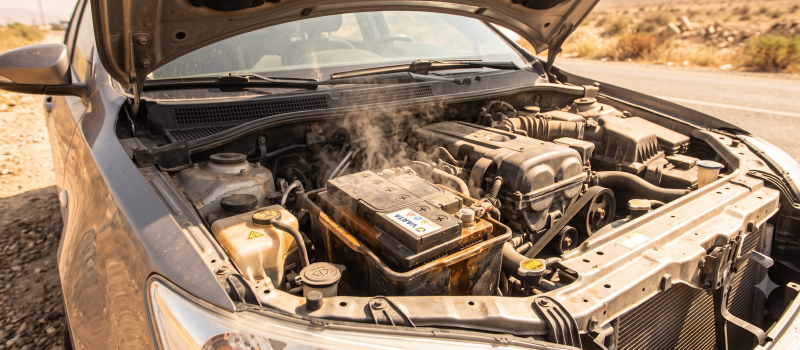
We tend to blame the cold, but summer heat is even harder on your car battery: it speeds up evaporation and internal corrosion and shortens its life with almost no warning. We explain why it happens and what you can do to avoid a breakdown when temperatures soar.
Quick answer: although most battery failures appear in the cold, the real enemy of its service life is heat. High temperatures evaporate the electrolyte, accelerate internal corrosion and increase self-discharge. Heat wears the battery down silently during the summer and the fault is exposed on the first cold morning, when it no longer has any margin. The solution: check the state of the battery at the end of summer and replace it as a precaution if it is more than 4 years old or shows signs of weakness.
There is a very widespread myth: "batteries only fail in winter". The technical reality is the opposite. Heat damages the battery more than cold does; what happens is that the cold is what exposes the damage already done. Let us explain.
Why does heat damage the battery?
A lead-acid battery is pure chemistry, and chemistry speeds up with temperature. In summer three things happen at once:
The electrolyte evaporates
The water in the acid is lost in the heat; if the plates become exposed, the loss of capacity is irreversible.
The plates corrode
Heat "ages" the battery from the inside, degrading the lead grids that store the energy.
Self-discharge increases
In the heat, the battery discharges on its own more quickly when the car is parked.
So why does it fail in winter?
Because the cold does not create the problem, it reveals it. At low temperatures, the battery delivers less current than it is capable of at normal temperature, and the engine is harder to start because the oil is thicker. A battery that summer has left at 60-70 % of its health no longer has any margin and does not start on the first cold morning.
Summer factors that finish it off
- Short journeys: in town, the alternator does not manage to fully recharge the battery, which stays chronically low (it sulphates).
- Air conditioning at full blast, multimedia, sat nav, portable cool boxes… a lot of electrical consumption.
- The car parked in the sun for days on holiday, with the heat cooking the battery.
- Long periods standing still added to accelerated self-discharge.
How to avoid a breakdown: 6 tips
Park in the shade
You reduce the battery's working temperature whenever you can.
Check the terminals
Clean them and tighten; corrosion (white/green powder) increases with heat.
Avoid short journeys
Every now and then take a longer trip or use a trickle charger.
Check its health
A test at the end of summer tells you whether it will make it through winter.
Watch for the signs
Slow starting, dimming lights, the Start-Stop stops working or the warning light comes on.
Change it in good time
If it is more than 4-5 years old or shows symptoms: it is cheaper than a recovery truck.
Long trip this summer? If your battery is more than 4 years old or feels sluggish to start, replace it before you set off. It is the most common breakdown on the road and also the easiest to prevent.
Change your battery with fast, home delivery and cash on delivery. Give us the registration plate or model and we will confirm yours.
View car batteriesFrequently asked questions
Does heat drain the car battery?
Yes. Heat accelerates self-discharge and the evaporation of the electrolyte, and degrades the plates. Even if the battery still starts the car, summer reduces its service life and its capacity.
Why does the battery fail in winter if the damage is done by heat?
Because the cold reduces the current the battery can deliver and increases the effort needed to start. A battery worn down by summer no longer has any margin and fails on the first cold morning.
How many years does a car battery last?
On average between 4 and 6 years, but in hot climates or with lots of short journeys it can last less. From 4 years onwards it is worth checking its condition.
How do I protect the battery in summer?
Park in the shade, keep the terminals clean and tight, avoid overdoing short journeys, check its condition at the end of summer and replace it as a precaution if it is old or showing symptoms.