Varta, Bosch, Tudor or Exide: who really makes your battery
RSS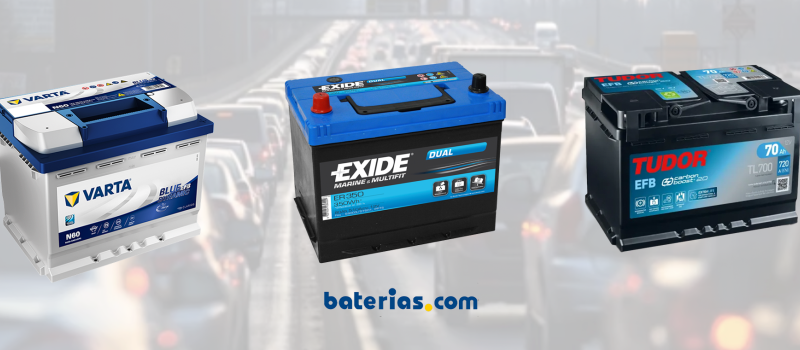
The battery aisle looks like a market of twenty brands. The industrial reality: a handful of factories make almost everything, and knowing the map saves you paying twice for the same thing — or explains why that "own-brand" looks so much like a premium one.
⚡ The essentials in 20 seconds
- There are fewer factories than brands: Clarios makes Varta and Bosch; Exide makes Exide and Tudor.
- Within a factory there are ranges: the budget and premium ones don't share plates.
- Compare range and specifications, not logos.
- Distrust brands with no traceable maker at "impossible" prices.
The real map of factories in Europe
- Clarios (ex Johnson Controls): makes Varta and the European automotive Bosch batteries, plus many original fitments. If your car came with Varta from the factory, the equivalent Bosch comes off the same line.
- Exide Technologies: Exide and Tudor — same plants, twin catalogues with different names by commercial heritage.
- Banner, Moll, FIAMM: independent manufacturers with a strong presence in the European market, though we don't sell them at baterias.com.
- Asian makers (GS Yuasa, Hankook/Atlas BX…): dominate motorcycles and are growing in cars, with Japanese/Korean original-fitment quality.
So does the brand not matter?
Not exactly. Within the same factory there are ranges: the budget and premium lines share a logo, not plates. A Varta Blue and a Varta Silver are different products; a Bosch S4 and a Varta Blue, almost the same. The practical rule: compare range and specifications (Ah, CCA, technology), not logos — as we explain in how much a battery costs, you pay for factory and range, not the sticker.
Two batteries coming off the same factory doesn't make them identical: a higher range carries more lead, better separators and more CCA. What makes no sense is paying a premium for the brand when the range and specifications are the same.
How to use this when buying
- Start from your car's specifications (by number plate is fastest and most reliable).
- Among technical equivalents from the same factory, choose the freshest and best-guaranteed, not the one with the most marketing.
- Distrust brands with no traceable maker at "impossible" prices: they're usually re-labelled old stock.
What about carmaker-branded batteries?
Batteries with the vehicle brand's logo (the "original") are almost always made by one of the big makers we've seen, with a premium for the logo. Unless your car needs a very specific approval, a battery from the same factory, range and specifications gives you the same for less money.
In summary
Our battery brand comparison breaks it down brand by brand, and the complete guide gives you the technology context. With the factory map in mind, buying a battery stops being a logo lottery.
How to read a battery label
Once you know the brand matters less than the factory and range, the label tells you almost everything: the capacity (Ah), the cold-cranking amps (CCA or EN), the technology (conventional, EFB, AGM) and often a manufacture code with the date. Compare those figures between candidates and you'll see that two batteries of different "brands" can be twins — or that the "premium" one you were about to buy has the same CCA as a cheaper one from the same factory.
Motorcycle, leisure and other batteries
The factory map also applies beyond the car: in motorcycles, the Asians (GS Yuasa and the like) dominate original fitment and many "brands" are really their re-labelled product; in leisure and solar, much of the deep-cycle lead comes from a small group of European and Asian factories. The lesson is the same: look at specifications and maker, not the colour of the sticker.
Frequently asked questions
Is it true that Varta and Bosch are the same battery?
They come from the same company (Clarios), and the range equivalents share factory and often design. They're not always identical — there are different ranges — but paying more for one over the other rarely adds value if the specifications match.
Is my car's "original" battery better?
It's almost always made by one of the big makers with a premium for the carmaker's logo. Barring specific approvals, a battery from the same factory, range and specifications gives you the same for less.
Can I trust an unknown brand?
It depends on whether there's a solvent factory behind it and the specifications match. Distrust brands with no traceable maker at "impossible" prices: they're usually re-labelled old stock.
Where is the manufacturing date on a battery?
It's usually stamped on the lid or on one side: sometimes as a direct date, and often as a code with one letter (the month) and one number (the year). Checking it tells you whether the battery is genuinely new or has been sitting in storage losing life.
Does the country of manufacture matter?
The specific factory and range matter more than the country itself. The big groups have plants in several countries with the same quality standards; what's relevant is that it's a solvent maker and that the specifications and freshness are right for your car.
Buy on specifications, not on logo
Enter your number plate and we'll show you the batteries that truly fit your car, from solvent makers.
Find my battery →