
Suzuki Carry battery: what each engine takes, with prices
Car BatteriesWhich battery does a Suzuki take?
Based on 54 orders from Suzuki owners, the best-selling batteries are Car battery Varta A15 Dynamic SLI 12V 40Ah 330A, battery Exide EL600 12V 60Ah 640A EFB and Car battery Varta B33 Dynamic SLI 12V 45Ah 330A. Capacity ranges from 9 to 95 Ah depending on model and engine: confirm it by choosing your model.

Which battery each Suzuki takes
For guidance: the exact battery depends on engine and year. Confirm it by choosing your version. Data from 54 real orders from Suzuki owners.
What Suzuki owners buy
- Car battery Varta A15 Dynamic SLI 12V 40Ah 330A 6 orders · SJ410, Samurai Closed Off Road Vehicle 43.80 € View battery
- battery Exide EL600 12V 60Ah 640A EFB 5 orders · SX4, Vitara 76.80 € View battery
- Car battery Varta B33 Dynamic SLI 12V 45Ah 330A 5 orders · Jimny Open Off Road Vehicle, Jimny Closed Off Road Vehicle 49.80 € View battery
- Car battery Varta E23 Dynamic SLI 12V 70Ah 630A 4 orders · Vitara, Samurai Open Off Road Vehicle 83.80 € View battery
Reviews from Suzuki owners
-
★★★★★
«Excelente precio y mismo modelo que la original de mi coche. Funciona a la perfección. La anterior me duró 10 años.»
Airam P. · Suzuki Sx4 S-Cross · Exide EL600 12V 60Ah 640A EFB
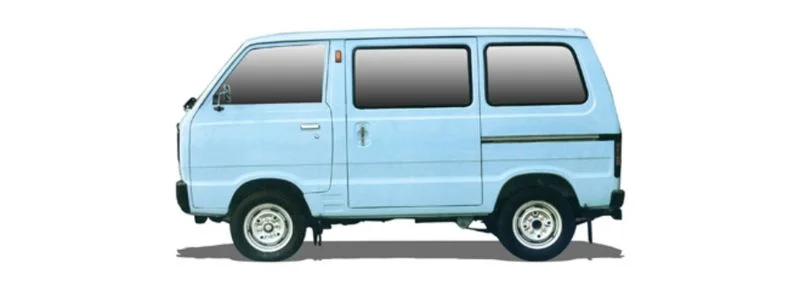
We stock 2 batteries that fit the Suzuki Carry across its 5 generations (1990-2025), from 40 to 40 Ah, with cold cranking between 330 and 330 A and prices starting at 42.80 € including VAT.
- 📅 1990–2025
- 🚗 5 generations
- 🔋 2 compatible batteries
- from 42.80 €
Frequently asked questions
- It depends on the generation and engine: there are 2 compatible batteries in total, from 40 to 40 Ah and 330 to 330 A of cold cranking. The best sellers for this model are Car battery Varta A14 Dynamic SLI 12V 40Ah 330A, Car battery Varta A15 Dynamic SLI 12V 40Ah 330A. With your plate we tell you the exact one in seconds.
- Between 42.80 € and 43.80 €, VAT included, depending on capacity and technology (lead-acid). Start-Stop versions (AGM or EFB) sit at the top of the range because they withstand many more cycles.
- By the registration year: Carry Platform/Chassis II (1999-2025); Carry Van II (1999-2025); Carry Bus (1999-2025); Carry Van I (1995-1999); Carry Platform/Chassis I (1990-2025). If your year falls in the overlap between two generations, tell them apart by body type (hatchback, estate or coupé) or use the plate finder, which settles it with no doubt.
- It lasts only a few months: Start-Stop puts the battery through hundreds of cycles a day and a conventional battery cannot cope. The ECU may also disable the automatic stop function. Always fit EFB or AGM, the same technology as the original.
- On most versions, yes: disconnect the negative terminal first, then the positive, release the clamp and fit the new battery in reverse order. On Start-Stop models or cars with battery management (BMS), register the new battery with a diagnostic tool so the ECU adjusts charging.

